

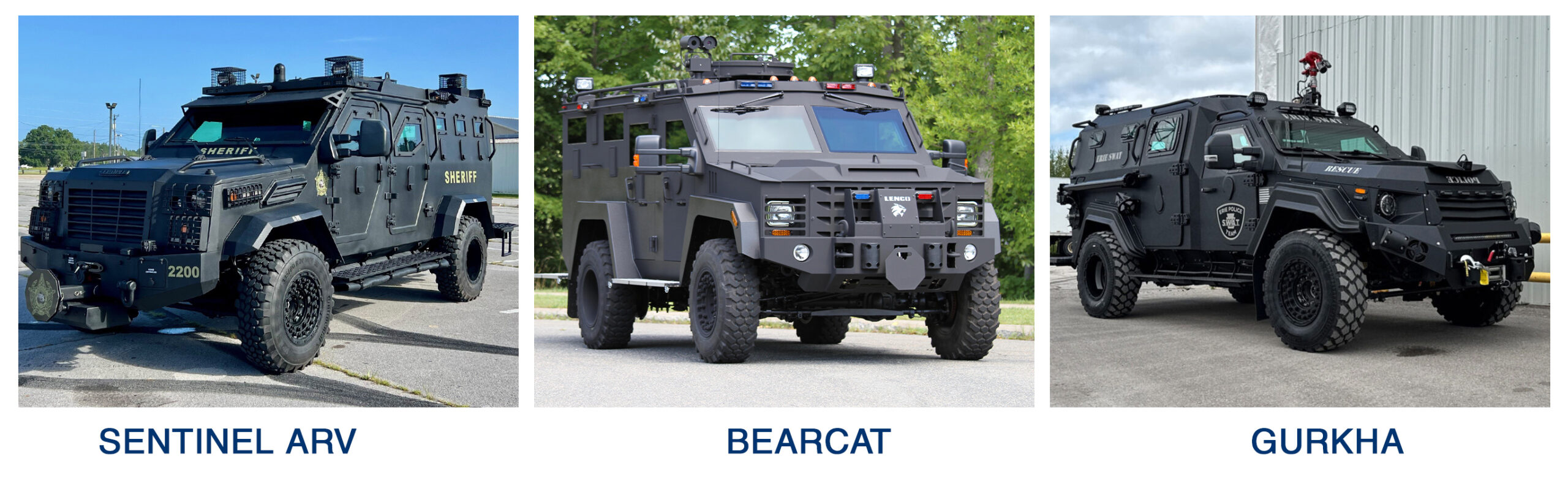
Comparing protection engineering and vehicle design
Agencies comparing the IAG Sentinel ARV, Lenco BearCat G2 or G3, and Terradyne Gurkha MPV should look closely at protection engineering. Armor coverage, component integration and testing provide a useful basis for evaluating the finished vehicle.
The Sentinel brings a valuable capability to this evaluation: IAG designs and manufactures both vehicle armor and ballistic glass within its own group. This gives its engineers control over how the glazing, steel armor and supporting structures work together.
Protection across the complete vehicle
Armor coverage deserves a detailed review. Doors, windows, hatches and other openings must work with the surrounding structure to maintain the intended level of protection. A vehicle’s headline ballistic rating cannot explain all of those design choices.
The Sentinel’s published protection package includes the cabin and firewall, together with armor for the engine bay and fuel tank. Its design also incorporates an armored hood, armored gun-port closures and overlapping armor interfaces. These features make protection continuity a central part of the vehicle evaluation: how the separate elements fit together matters as much as the presence of each component.
A published Sentinel procurement configuration adds further detail, listing radiator, battery, engine control module and diesel exhaust fluid tank protection, plus an armored oil-pan guard. This extends the discussion beyond the passenger compartment to the systems that support continued vehicle operation. Agencies should identify the coverage included in their proposed build and distinguish standard equipment from options.
Ballistic glass designed with the armor
The windshield and side windows occupy a significant part of an armored vehicle’s protective surface. Their construction, thickness, optical quality and integration with the surrounding armor deserve the same attention as the steel body.
IAG manufactures certified ballistic glass in-house through Transparent Armor Systems, or TAS. Because the group produces the transparent and steel armor, its engineers can develop the glass geometry, supporting frames and adjacent armor together. The practical benefit is control over the fit between those components, including the transition from glass to steel.
Glass thickness belongs in a serious comparison, alongside the specified ammunition, impact velocity, number of hits and test conditions. A thickness figure becomes useful when it is tied to an international ballistic standard such as NIJ IV or UL 10 (.50cal).
TAS describes production checks covering dimensions, thickness, geometry, light transmission and optical distortion, with accelerated ageing and abrasion testing on sampled units. These are relevant to both protection and the visibility operators depend on, as well as, glass lifespan. IAG also operates a replacement-glass program through TAS, providing a direct route back to the group that manufactured the glazing ensuring correct fit and quick glass delivery.
Testing that supports the stated protection
An effective comparison connects every protection claim to evidence. Material testing as per international standards such as the National Institute of Justice for Ballistic Protection Levels and Associated Test Threats (NIJ Standard 0123.00) which is published by the US Department of Justice.
The Sentinel is available in protection configurations including NIJ Level IV and .50-caliber protection. The supporting documentation should identify the applicable standard, threat and coverage for the selected build. References to NIJ, EN, UL, VPAM or STANAG should be read in their specific context; they do not describe identical test requirements.
IAG’s engineering background includes STANAG-certified MRAP platforms and independently tested VPAM-certified vehicles elsewhere in its portfolio. That provides useful context for the manufacturer’s capabilities, while acceptance of a Sentinel should be based on documentation applicable to that vehicle and its configuration.
BearCat and Gurkha buyers should apply the same discipline. Lenco publishes third-party testing claims, but does not specify the standards used. Terradyne reports full-vehicle destructive testing for the Gurkha MPV so a buyer needs to request the full testing and certification documents to confirm the testing parameters and results. A meaningful comparison examines the scope of the evidence and the delivered specification for each platform.
Manufacturing capability behind the design
Engineering quality also depends on the ability to reproduce a design consistently. IAG combines in-house component engineering, ballistic-glass production and fabrication with CNC laser cutting, bending and machining. This gives the group direct control over the manufacture and fit of key armor components.
IAG combines these manufacturing capabilities with ISO 9001:2015 quality-management certification. Quality-management certification supports manufacturing discipline; ballistic evidence establishes the protection offered by a particular product. Both deserve attention during procurement.
Design details that support the rescue mission
Protection engineering must remain effective in a vehicle that operators can use confidently. Sentinel equipment choices include wheels with integrated run-flat and bead-lock capability, an armored roof escape hatch, surveillance and thermal-camera systems, breaching ram with attachments, a customizable interior which can also accommodate a standard medical stretcher. The proposed configuration should bring those capabilities together around the agency’s rescue requirements.
The same review should cover door operation, access while wearing equipment, visibility, and the completed vehicle’s axle loads and remaining payload. Dimensions and turning behavior remain part of that assessment, alongside the protection and engineering that justified the purchase.
What should drive the final comparison
The Sentinel’s detailed coverage, integrated glass and steel engineering, and direct component support give agencies concrete reasons to include it in a rigorous technical evaluation.
Contact IAG to discuss a Sentinel ARV configuration, review its protection coverage and supporting technical documentation, and arrange an agency evaluation.